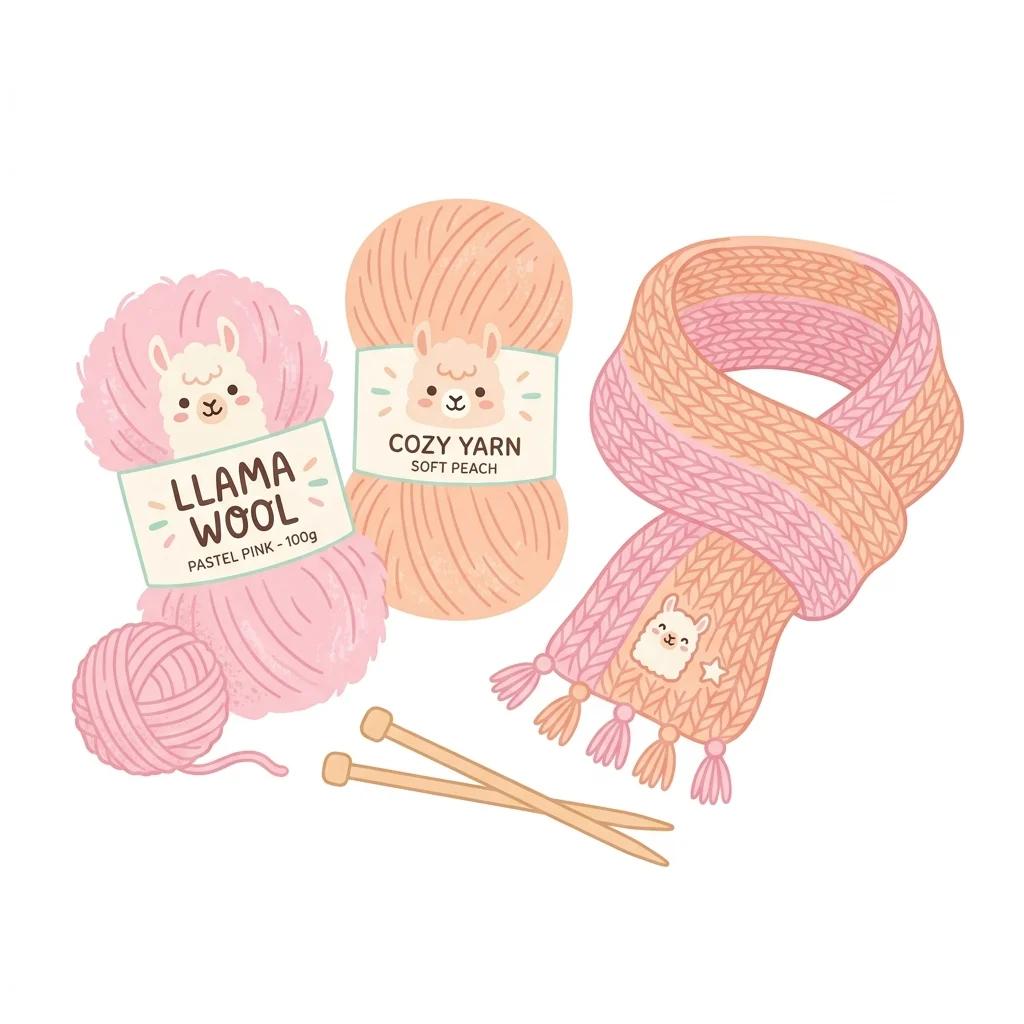
Llama Wool Benefits: Why It's One of Nature's Best Fibers
Explore the benefits of llama wool: hypoallergenic, lightweight, warm and sustainable. Compare llama fiber vs alpaca, merino and synthetic fabrics.
The benefits of llama wool make it one of nature's best fibers — warm, lightweight, hypoallergenic, and produced with a far smaller environmental footprint than most alternatives. Whether you are shopping for a new sweater, sourcing materials for a sustainable fashion project, or simply curious about this remarkable Andean fiber, this guide covers everything you need to know: thermal performance, fiber fineness, comparisons with alpaca, merino, and synthetic fabrics, care instructions, and sustainability credentials.
Thermal Properties: Warm Without the Weight
Llama wool provides outstanding insulation relative to its weight. Each fiber has a partially hollow structure that traps air, creating a natural thermal barrier that keeps you warm without adding bulk. This makes it ideal for outdoor garments, base layers for high-altitude activities, cold-weather accessories, and home textiles such as blankets and throws.
Crucially, llama fiber is not just warm — it is also breathable. The same structure that retains heat in cold conditions allows moisture vapor to escape when you warm up, preventing the clammy overheating that many synthetic insulations produce. This thermal regulation makes llama wool comfortable across a wide range of activity levels and temperatures, from a brisk mountain walk to a relaxed evening indoors.
Hypoallergenic and Lanolin-Free
One of the most significant benefits of llama wool compared to sheep's wool is the absence of lanolin. Lanolin is the natural grease in sheep fleece that makes it water-resistant, but it is also the primary trigger for skin irritation and allergic reactions in people who say they "can't wear wool." Llama fiber contains no lanolin at all, which means it is naturally hypoallergenic and far better tolerated by sensitive skin.
People with eczema, atopic dermatitis, or general wool sensitivity often find they can wear llama garments without any irritation. Combined with the relatively smooth scale structure of llama fiber — which does not grip the skin the way coarser wools do — this makes llama wool a strong choice for next-to-skin applications such as underwear, socks, baby garments, and scarves.
Lightweight Yet Strong: Durability You Can Feel
Llama fiber has excellent tensile strength and good resistance to pilling when cared for correctly. A well-made llama wool sweater, washed with care and stored properly, will outlast several seasons of synthetic alternatives without losing its shape or thermal properties. The fiber's natural crimp gives it elasticity, helping garments recover their form after stretching.
Llama wool is also significantly lighter than sheep's wool of equivalent warmth. This weight advantage is particularly noticeable in blankets, travel wraps, and outerwear, where a llama wool garment can feel noticeably less heavy than a comparable product made from merino or traditional sheep's wool — while delivering the same or better insulation.
Llama Fiber vs Alpaca, Merino, and Synthetic Fabrics
Understanding how llama wool compares to other fibers helps you make an informed purchase decision:
- Llama vs alpaca: Alpaca fiber is generally finer (14–26 μm vs 20–30 μm for llama) and slightly softer at equivalent micron counts. However, llama fiber is more durable, more resistant to pilling, and typically more affordable. Both are lanolin-free and hypoallergenic. For garments where longevity matters as much as softness, llama is often the better choice.
- Llama vs merino: Fine merino (17–19 μm) is softer than standard adult llama fiber, but merino requires chemical superwash treatment to be machine-washable, adding an environmental cost. Baby llama fiber (20–24 μm) is comparable in softness to fine merino without lanolin or chemical finishing. Merino is more widely available; llama is rarer and often more sustainably sourced.
- Llama vs cashmere: Cashmere is finer and has an exceptional softness, but it pills heavily, degrades quickly with repeated washing, and its production is linked to overgrazing and desertification in Central Asia. Llama wool is more durable, more eco-friendly, and a fraction of the price for comparable warmth.
- Llama vs synthetic (polyester, acrylic): Synthetics are cheaper and often more resistant to mechanical wear, but they do not breathe, they release microplastic pollution with every wash, they are derived from fossil fuels, and they do not biodegrade. Llama wool outperforms synthetics on breathability, comfort, sustainability, and end-of-life impact.
Comparative Table: Llama Wool vs Other Fibers
| Characteristic | Llama Wool | Merino Sheep Wool | Cashmere | Polyester |
|---|---|---|---|---|
| Typical micron count | 20–30 μm | 16–24 μm | 14–19 μm | N/A |
| Contains lanolin | No | Yes | No | No |
| Hypoallergenic | High | Medium | High | Variable |
| Pilling resistance | High | Medium | Low | High |
| Thermal capacity | Very high | High | High | Medium |
| Breathability | High | High | High | Low |
| Environmental impact | Low | Low–medium | High (overgrazing) | Very high |
| Estimated price (per 100g) | €12–25 | €15–35 | €40–120 | €2–8 |
Micron Count: The Measurement That Changes Everything
The micron count (μm) is the diameter of each fiber measured in micrometers, and it is the single most reliable indicator of softness. The lower the micron count, the finer and softer the fiber feels against the skin. Llama fiber ranges between 20 and 30 microns depending on the part of the animal's body and its age:
- First-quality fiber (baby llama): 20–24 μm. As soft as fine Merino. Obtained from the first shearing of young animals, this is the premium end of the llama fiber range.
- Standard adult fiber: 24–30 μm. Excellent for sweaters, blankets, and accessories. Soft enough for most people but may feel slightly textured on very sensitive skin.
- Coarse fiber (guard hair): over 30 μm. Used for rugs, outdoor gear, and technical items where strength and durability take priority over softness.
When you purchase a llama wool product, always ask for the micron count. A reputable brand or supplier will be able to provide this information readily. If they cannot, treat it as a warning sign about the transparency of their sourcing.
Llama Wool and Sustainability
The production of llama wool has a significantly smaller environmental footprint than synthetic fibers, and is comparable to or lower than most other animal fibers. This is not just marketing — there are concrete, measurable reasons:
- Low soil impact: llamas have soft padded feet rather than hard hooves, so they do not compact or damage the fragile soils of Andean highland ecosystems the way sheep or goats do. This is especially important in the delicate puna grasslands above 3,500 meters.
- Feed efficiency: llamas convert poor-quality, low-input pasture into high-quality fiber with greater efficiency than most other fiber-producing animals. They require less supplemental feed and water per kilogram of fiber produced than sheep or goats.
- No chemical finishing required: llama wool does not require the chlorine-based superwash treatment that commercial Merino wool often undergoes to become machine-washable. This eliminates a significant source of chemical pollution in fiber processing.
- Carbon footprint: llamas produce significantly less methane per kilogram of fiber than cattle or sheep, contributing less to agricultural greenhouse gas emissions.
- Support for rural communities: when purchased through responsible trade channels, the llama wool supply chain directly sustains Andean communities with fair incomes, preserving both cultural heritage and economic livelihoods.
How to Wash and Care for Llama Wool Garments
Llama wool is more resilient than many delicate natural fibers, but specific care will extend the life of your garments significantly and preserve their softness and thermal properties:
- Hand washing: use cold or lukewarm water (maximum 30°C) with a pH-neutral wool detergent. Do not rub or wring — submerge the garment and press gently to work the water through the fiber.
- Machine washing: only if the garment label explicitly permits it. Use the wool or delicates cycle with a low spin speed. Avoid fabric softener, which coats the fibers and reduces their thermal performance over time.
- Drying: always dry flat on a clean, dry surface away from direct heat and strong sunlight, which can cause fiber degradation and color fading. Never tumble dry.
- Storage: fold garments rather than hanging them — the weight of a hung knit will distort the structure over time. Store in breathable fabric bags or cotton pillowcases. Add sachets of lavender or cedar to repel moths without the need for harsh mothballs.
- Pilling: if pilling develops, remove it with a fabric shaver (lint remover) or a purpose-made pilling stone. Never cut pills with scissors, as this weakens the surrounding fibers.
Buying Guide: What to Look For
- Ask for the micron count: a quality product should always be able to provide this. It is the most reliable indicator of softness and suitability for different uses.
- Check certifications: look for GOTS (Global Organic Textile Standard) or RAS (Responsible Alpaca Standard, also applied to llamas) to verify both sustainability and animal welfare claims.
- Verify the origin: Bolivian and Peruvian cooperatives with traceable supply chains generally offer the best combination of quality, ethical sourcing, and cultural authenticity.
- Prefer natural fiber blends: if the product is blended, natural fiber blends (llama and alpaca, or llama and organic cotton) preserve breathability and biodegradability better than synthetic blends.
- Avoid suspiciously low prices: genuine, quality-certified llama wool has a cost of production that is reflected in its price. Products marketed as "llama wool" at polyester prices almost certainly contain a very small percentage of actual llama fiber.
Frequently Asked Questions About Llama Wool
Does llama wool shrink easily? The shrinkage risk is low when washed in cold water without friction or aggressive spin cycles. The main causes of shrinkage are hot water and mechanical agitation, both of which are easily avoided with hand washing or a gentle machine cycle.
Is llama wool suitable for people with atopic skin or eczema? It is generally better tolerated than sheep's wool due to the complete absence of lanolin, which is the most common trigger for wool-related skin reactions. However, individual responses vary — if you have very sensitive skin, try a short patch test before wearing a new garment for extended periods.
How is llama wool different from alpaca wool? Both are lanolin-free Andean camelid fibers. Alpaca tends to be finer and slightly silkier; llama is coarser on average but more durable and usually more affordable. Baby llama fiber overlaps significantly with fine alpaca in softness.
How can I tell if a product contains genuine llama wool? Request documentation of the fiber composition from the seller. Certified and reputable brands can provide fiber content certificates. If the price is very low and no documentation is available, the "llama content" is likely minimal.
A Fiber That Deserves Your Full Attention
Llama wool is one of the most complete natural fibers in the world: warm, lightweight, hypoallergenic, durable, and produced with minimal environmental impact. Choosing llama wool for your wardrobe is an investment in genuine quality, in millennia-old Andean textile traditions, and in a more conscious approach to fashion that is genuinely less harmful to the planet. Understanding the technical details — especially the micron count and fiber origin — will allow you to choose with confidence and pay for what something is truly worth.
Llama Fiber in the Global Sustainable Textile Industry
The global textile industry is increasingly incorporating llama and alpaca fiber as a response to consumer demand for sustainable, high-performance, and ethically sourced alternatives to both synthetic and conventionally produced natural fibers. In Europe, brands ranging from large sustainable fashion labels to small artisan cooperatives are building collections around Andean camelid fibers, citing their combination of performance, provenance, and low environmental impact as key differentiators in a crowded market.
In terms of certifications, the most relevant label for confirming that a llama wool garment is genuinely sustainable is GOTS (Global Organic Textile Standard), which certifies both the organic origin of the fiber and fair labor conditions throughout the production chain. Complementarily, the Responsible Wool Standard (RWS) — adapted to camelids through the Responsible Alpaca Standard (RAS) — guarantees animal welfare from farm to finished product. When purchasing llama fiber goods, look for items carrying at least one of these certifications: they represent the meaningful difference between a genuinely sustainable product and one that merely uses sustainability as a marketing slogan.
TodoLlamas Team
Passionate about Andean culture and the world of camelids. Our mission is to research and share the most curious information about llamas.