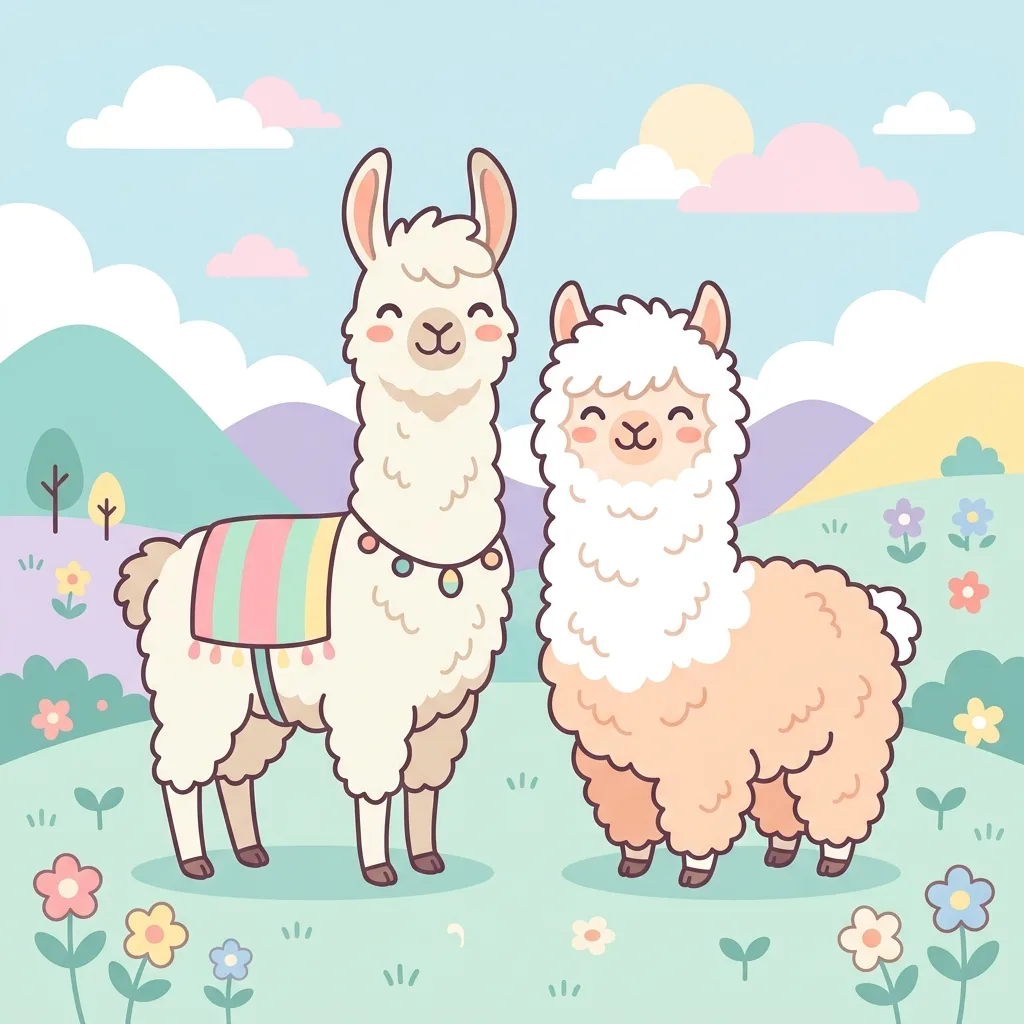
Differences Between Llamas, Alpacas, Vicuñas and Guanacos: Complete Guide
Learn to tell apart llamas, alpacas, vicuñas and guanacos: size, fiber quality, behavior, and traditional Andean uses. The definitive comparison guide.
Understanding the differences between llamas, alpacas, vicuñas and guanacos is easier than it looks once you know the four key criteria: size, fiber, behavior and domestication status. All four belong to the South American camelid family, share Andean origins, and evolved from a common ancestor that migrated from North America around three million years ago — yet each has carved out a distinct ecological and cultural role. This complete guide covers everything you need to tell them apart and appreciate what makes each species extraordinary.
Evolutionary history and scientific classification
South American camelids belong to the family Camelidae and evolved in North America roughly 40 million years ago. They migrated to South America three million years ago during the Great American Biotic Interchange. Today they are divided into two genera:
- Lama: includes llamas (Lama glama) and guanacos (Lama guanicoe)
- Vicugna: encompasses alpacas (Vicugna pacos) and vicuñas (Vicugna vicugna)
This classification reflects important genetic differences that influence behavior, reproduction and physical characteristics. DNA analysis has confirmed that the alpaca is a domesticated descendant of the vicuña, while the llama is the domesticated form of the guanaco.
Detailed physical differences
Comparative size and weight
| Species | Height (cm) | Weight (kg) | Body length (cm) |
|---|---|---|---|
| Llama | 109–119 | 130–200 | 200–350 |
| Alpaca | 81–99 | 48–84 | 120–225 |
| Vicuña | 75–85 | 35–65 | 150–180 |
| Guanaco | 90–130 | 90–140 | 170–220 |
Distinctive morphological features
Ears: Llamas have long, banana-shaped curved ears; alpacas have short, pointed upright ears; vicuñas display small, alert triangular ears; guanacos have medium-sized, mobile ears.
Head: The llama has an elongated, narrow head; the alpaca has a more compact and rounded face; the vicuña shows a small, delicate head; the guanaco has a proportionate, elegant head.
Tail: Llamas carry their tail high and curved; alpacas hold it low and straight; vicuñas keep it short and close to the body; guanacos carry it horizontal or slightly raised.
Detailed textile fiber analysis
Technical fiber properties
| Fiber | Diameter (microns) | Annual yield (kg) | Price per kg (USD) |
|---|---|---|---|
| Vicuña | 11–14 | 0.2–0.5 | 300–600 |
| Alpaca (Suri) | 18–25 | 3–5 | 15–40 |
| Alpaca (Huacaya) | 20–30 | 2.5–4 | 10–25 |
| Llama | 25–40 | 3–7 | 5–15 |
| Guanaco | 16–24 | 0.5–1 | 50–150 |
Characteristics and uses of each fiber
Vicuña fiber: The finest and most valuable fiber in the animal kingdom. Its unique microscopic structure makes it hypoallergenic, thermoregulating and extraordinarily soft. A vicuña coat can cost between $15,000 and $40,000 USD.
Alpaca fiber: Available in two varieties — Huacaya (dense and crimped) and Suri (long and silky). Naturally water-repellent, fire-resistant and available in 22 natural colors. It contains no lanolin, making it ideal for sensitive skin.
Llama fiber: Durable and robust, ideal for outdoor products. The coarser fiber is used for rugs and tapestries, while the finer grade goes into garments. It provides excellent thermal insulation.
Domestication and cultural history
The domestication process
The domestication of llamas and alpacas began 6,000–7,000 years ago in the Andean highlands. The Inca perfected selective breeding techniques that persist to this day. The llama was fundamental to transport within the Inca Empire, capable of carrying 25–30 kg across mountainous terrain.
Alpacas were bred specifically for their fiber. The Inca developed specialized breeds and shearing techniques that maximized fiber quality. Only royalty was permitted to wear garments made from first-quality vicuña and alpaca.
Current economic importance
Peru holds 87% of the world's alpaca population (3.7 million head). The alpaca fiber industry generates $150 million per year. Bolivia maintains the largest llama population (2.3 million), followed by Peru (1.2 million).
The "chaku," or vicuña shearing ceremony, is an ancestral ritual conducted every 2–3 years, enabling species conservation while yielding valuable fiber. A single vicuña produces only 200–500 grams of usable fiber per shearing.
Behavior and temperament
Social structure
Llamas: Form hierarchical groups with a dominant male. They are protective and may show aggression toward threats. They spit when they feel threatened or challenged.
Alpacas: More docile and gregarious. They form strong bonds within the herd. They rarely spit at humans — only at one another to establish hierarchy.
Vicuñas: Live in territorial family groups. Males defend territories of 7–20 hectares. They are extremely alert and fast, reaching speeds of up to 60 km/h.
Guanacos: Form migratory herds and are the most adaptable to different climates. They can survive from sea level to 4,500 meters altitude.
Specific habitats and adaptations
Detailed geographic distribution
Llamas: Primarily found on the Bolivian-Peruvian altiplano (3,500–4,000 m). They tolerate temperatures from -18°C to 30°C. World population: approximately 4.2 million.
Alpacas: Concentrated in the central Peruvian highlands (3,500–4,500 m). They prefer humid grasslands. World population: approximately 3.7 million (87% in Peru).
Vicuñas: Range from Ecuador to Argentina (3,200–4,800 m). Current population: approximately 470,000 — a remarkable recovery from just 6,000 in 1960.
Guanacos: The widest distribution of the four, from Peru to Tierra del Fuego (0–4,500 m). Population: approximately 1.2 million, with 90% in Argentina.
Physiological adaptations
All South American camelids display remarkable adaptations to high altitude:
- Blood: Higher concentration of red blood cells and hemoglobin with greater oxygen affinity
- Heart: 50% larger than similar mammals living at sea level
- Kidneys: Extremely efficient at water conservation
- Feet: Soft padded soles that do not damage fragile mountain soils
- Digestion: A three-compartment stomach system that extracts maximum nutrition from sparse vegetation
Practical identification guide
Field identification
- Check the size: As big as a small horse = llama. About the size of a large sheep = alpaca or guanaco. Smaller still = vicuña.
- Look at the ears: Long and curved = llama. Short and pointed = alpaca. Small and triangular = vicuña. Medium-sized = guanaco.
- Assess the setting: With humans and cargo = domesticated llama. In calm herds near farms = alpacas. Running free in open herds = vicuñas or guanacos.
- Examine the coat: Dense and crimped = Huacaya alpaca. Long and silky = Suri alpaca. Short and fine = vicuña. Variable and coarser = llama or guanaco.
Behavioral cues
Defensive postures: Llamas raise their head and straighten their ears when assessing a threat. Alpacas cluster together. Vicuñas emit warning whistles. Guanacos adopt alert postures with the neck extended.
Communication: Each species uses characteristic sounds — llamas snort and grunt; alpacas emit soft humming; vicuñas whistle sharply; guanacos produce a gentle braying.
Conservation and threats
Conservation status
Vicuña: A conservation success story. From the brink of extinction (6,000 individuals in 1960) to a stable population of 470,000 in 2024. Listed on CITES Appendix II.
Guanaco: Least Concern, but populations are fragmented. The main threat is habitat loss due to sheep farming.
Llamas and alpacas: Domestic populations are stable, but conservation of ancestral genetic lineages requires ongoing attention.
Conservation programs
The Convention for the Conservation of the Vicuña (1979) established sustainable management through community chakus. Each community can conduct controlled shearing every 2–3 years, generating income that incentivizes conservation.
Genetic improvement projects for alpacas aim to maintain diversity while enhancing fiber quality. Peru's Germplasm Bank preserves genetic material from ancestral breeds.
Reproduction and husbandry
Comparative reproduction
Gestation: All four species have an 11-month gestation period and give birth to a single offspring (called a cria).
Sexual maturity: Llamas and guanacos: 2–3 years. Alpacas and vicuñas: 2 years.
Longevity: In captivity they can live 15–20 years; in the wild, 10–15 years.
Hybridization: Possible between species of the same genus. Llama × guanaco = "llanaco." Alpaca × vicuña = "paco-vicuña."
Frequently asked questions
Which species produces the most valuable fiber, and why?
The vicuña produces the most valuable fiber, due to several factors: an ultra-fine diameter (11–14 microns), a unique microscopic structure with minimal surface scales, exceptional thermoregulating properties, and extreme scarcity (only 200–500 g per animal every 2–3 years). One kilogram of vicuña fiber can fetch $300–600 USD.
Can the different species interbreed?
Yes, but with limitations. Species within the same genus can hybridize: llama × guanaco produces fertile "llanacos." Alpaca × vicuña yields "paco-vicuñas," but with reduced fertility. Crosses between genera (Lama × Vicugna) are possible but result in sterile offspring.
Which is best for small farms?
Alpacas are ideal for small farms due to their docile temperament, smaller size (requiring less space and food), higher fiber value and ease of handling. They are less aggressive than llamas. However, they must have company — a minimum of 2–3 animals.
What veterinary care do they need?
Annual vaccination against clostridial diseases, deworming every 3–4 months, annual dental check, yearly shearing for alpacas and llamas, external parasite control and supplementary feeding in winter. They are hardy animals but susceptible to meningeal parasites transmitted by deer.
How much space does each species need?
Alpacas: 200–400 m² per animal on rotational pasture. Llamas: 400–800 m² per animal. Both require a shelter of 4–6 m² per animal. Pasture should be rotated to prevent overgrazing and parasite buildup. Constant access to clean water is essential.
Llama, alpaca, vicuña or guanaco? How to tell them apart
South American camelids represent an extraordinary evolutionary adaptation to high-mountain environments. Understanding their specific differences not only enriches our knowledge of Andean biodiversity, but also helps us make informed decisions as consumers of textile products, responsible travelers, or potential breeders.
The conservation of these species — especially wild vicuñas and guanacos — depends on striking the right balance between sustainable use and habitat protection. The success of the vicuña conservation program demonstrates that it is entirely possible to combine economic benefits for local communities with the effective protection of threatened species.
Whether you are looking for quality textile products, planning a nature trip to the Andes, or simply want to deepen your knowledge of South American wildlife, understanding these differences will help you appreciate the remarkable natural and cultural wealth that these extraordinary Andean camelids represent. Discover more about what llamas eat in their natural habitat and how their wool offers unique benefits for the sustainable textile industry.
TodoLlamas Team
Passionate about Andean culture and the world of camelids. Our mission is to research and share the most curious information about llamas.