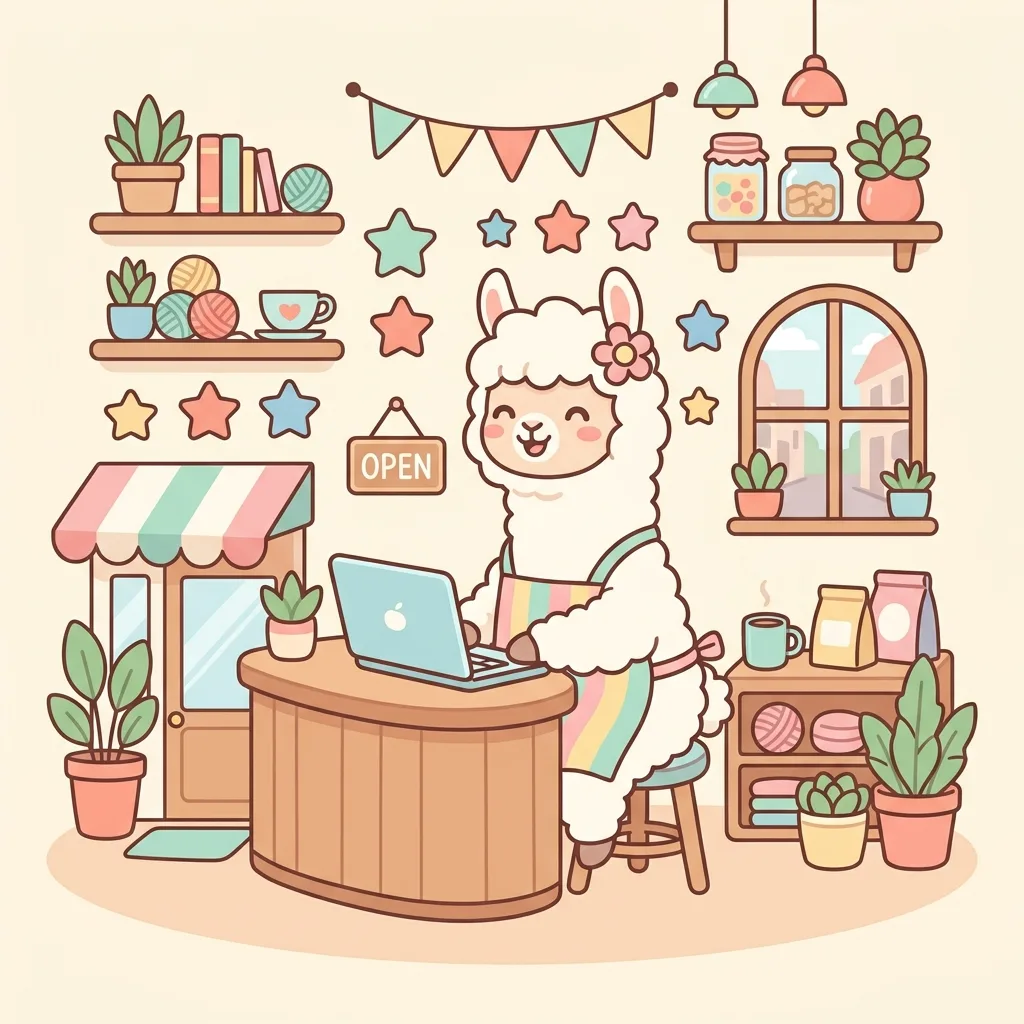
Llama Business Ideas: How to Start a Llama-Themed Business
Discover profitable llama business ideas: online stores, llama trekking, handmade products, social media and how to tap into the growing llama market.
The llama-themed product niche has characteristics that are highly favourable for entrepreneurs: stable demand in both English- and Spanish-speaking markets, strong margins on handcrafted or custom-designed items, and lower saturation compared to other animal-themed niches. This article analyses viable business models, the most profitable channels, and the most common mistakes when entering this market.
The Themed Online Store: Building an eCommerce Empire
Product Architecture and Strategic Curation
The success of a llama-themed online store rests on intelligent curation that balances variety, quality, and aesthetic consistency:
| Product category | Average margin | Expected volume | Logistical complexity |
|---|---|---|---|
| Stationery (notebooks, stickers) | 60-80% | High | Low |
| Textile (T-shirts, tote bags) | 40-60% | Medium-High | Medium |
| Home (cushions, mugs) | 45-65% | Medium | Medium-High |
| Accessories (jewellery, keychains) | 70-90% | Medium | Low |
| Premium products (authentic wool) | 30-50% | Low | High |
Platforms and Technology for Entrepreneurs
Your choice of technology platform determines future capabilities and operating costs:
- Shopify: Ideal for starting out (29€/month), optimised templates, specialised POD apps
- WooCommerce: Maximum customisation, self-hosted, ideal if you have technical skills
- Etsy: Established marketplace with an audience seeking unique products, 6.5% commission
- Amazon Handmade: Massive reach, FBA logistics available, high competition
- PrestaShop: Free European option, full customisation, moderate learning curve
Pricing and Bundling Strategies
Psychological pricing and bundle creation increase average order value and perceived worth:
- Tiered pricing: Basic product 15€, premium 25€, luxury 45€
- Themed bundles: "Llama office kit" (planner + pens + mug) with 20% discount
- Shipping threshold: Free shipping from 35€ to increase order value
- Seasonal pricing: Special offers at key times (back to school, Christmas)
- Loyalty programs: Progressive discounts for returning customers
The Print-on-Demand Revolution: Personalised Products with No Inventory
The POD Ecosystem: Specialist Suppliers and Platforms
The print-on-demand model lets you create unique products with no initial stock investment — perfect for market testing:
| POD supplier | Speciality | Production time | Example base cost |
|---|---|---|---|
| Printful | Premium textile, embroidery | 2-7 days | T-shirt: 11-15€ |
| Gooten | Home goods, accessories | 3-5 days | Mug: 8-12€ |
| Teespring (Spring) | Textile, integrated marketplace | 3-7 days | Hoodie: 16-22€ |
| Print24 | Stationery, packaging | 1-3 days | Notebook: 4-8€ |
| Redbubble | Artist marketplace | 1-2 weeks | Stickers: 3-6€ |
Designs that Convert: Principles of Commercial Success
Successful POD designs combine current trends with timeless elements:
- Elegant minimalism: Simple designs that work across different products
- Statement typography: Memorable phrases that resonate with personal values
- Vector illustration: Scalable to any size without loss of quality
- Limited palettes: 2-3 colours that print well on different materials
- Intelligent humour: Pop culture references that generate emotional connection
Eco-Friendly Packaging: Sustainable Differentiation
Sustainable packaging has become a decisive purchase factor for conscious consumers:
- Biodegradable materials: Kraft paper envelopes, paper tape, compostable stickers
- Minimal packaging: Reduce materials to the minimum needed for protection
- Consistent branding: Rubber stamps, recycled paper labels
- Educational inserts: Cards explaining the sustainable origin of the product
- Incentivised reuse: Packaging designed for a second life
Educational Experiences: Workshops and In-Person Events
Workshop Portfolio for Different Audiences
In-person workshops generate recurring income and build community around the brand:
| Workshop type | Duration | Price per person | Optimal capacity |
|---|---|---|---|
| Basic llama illustration | 2 hours | 25-35€ | 8-12 people |
| Llama amigurumi (crochet) | 4 hours | 45-65€ | 6-10 people |
| Felting workshop | 3 hours | 35-50€ | 8-15 people |
| Themed ceramics (children) | 1.5 hours | 18-25€ | 6-8 children |
| Props photography | 2 hours | 30-40€ | 4-6 people |
Educational Routes and Immersive Experiences
Educational experiences combine entertainment with learning — perfect for families and school groups:
- Portable museum: Travelling exhibition on Andean culture and llamas, adaptable to schools
- Urban safari: City-wide treasure hunts with llama-themed clues
- Documentary cinema: Screenings followed by discussions on sustainability and biodiversity
- Interactive storytelling: Story sessions with audience participation and costumes
- Virtual masterclass: Live online workshops with materials shipped in advance
Themed Parties and Corporate Events
Personalised events generate higher revenues and create memorable experiences:
- Llama birthday packages: Complete packages with decoration, activities, and catering
- Corporate team building: Collaborative workshops fostering group creativity
- Themed baby showers: Craft activities to create personalised keepsakes
- Seasonal events: Halloween, Christmas with a llama twist
- Product launches: Ambience services for aligned brands
Collaboration Ecosystem: Amplifying Reach and Authenticity
Strategic Partnerships with Andean Artisans
Authentic collaborations with producing communities create differential value and positive social impact:
| Collaboration type | Business model | Mutual benefit | Main challenges |
|---|---|---|---|
| Textile cooperatives | Fair trade, fixed prices | Authenticity vs. economic stability | International logistics, language |
| Local artists | Design licensing | Exposure vs. royalties | Copyright, exclusivity |
| Conservation NGOs | % of sales to causes | Purpose vs. credibility | Transparency, measurable results |
| Specialist influencers | Content collaborations | Reach vs. authenticity | Values alignment, ROI measurement |
Digital Creator Network and Micro-Influencers
Collaborating with specialist content creators amplifies reach organically:
- Emerging illustrators: Product-for-content exchanges for unique visual material
- Craft YouTubers: Sponsoring tutorials that feature your products
- Lifestyle Instagrammers: Styling your products in natural environments
- Creative TikTokers: Viral challenges and trends incorporating your designs
- Sustainability bloggers: Honest reviews highlighting ethical values
Cross-Promotion with Complementary Businesses
Strategic alliances with non-competing companies expand your customer base:
- Independent bookshops: Corner displays with themed stationery products
- Pet-friendly cafés: Joint merchandising for animal lovers
- Home decor shops: Temporary exhibitions of home products
- Yoga centres: Wellness products that complement a mindful philosophy
- Nurseries and schools: Personalised educational materials
Content Marketing: Building Authority and Community
Multiplatform Content Strategy
A coherent content strategy educates, entertains, and converts audiences at different points of the customer journey:
| Platform | Content type | Optimal frequency | Primary goal |
|---|---|---|---|
| SEO blog | Guides, tutorials, curiosities | 2-3 posts/week | Organic traffic, authority |
| Product photos, behind the scenes | 1 post/day | Engagement, direct sales | |
| TikTok | Trends, creative process, humour | 3-5 videos/week | Viral reach, younger audience |
| YouTube | Long tutorials, documentaries | 1 video/week | Authority, advertising revenue |
| Visual inspiration, DIY | 5-10 pins/day | Web traffic, discovery |
Newsletter and Personalised Email Marketing
Email marketing maintains a direct relationship with customers and drives recurring sales:
- Welcome series: 5 introductory emails on history, values, and featured products
- Educational content: Monthly tips on product care, trends, and curiosities
- Exclusive previews: Early access to new designs for subscribers
- Seasonal campaigns: Special collections for key dates throughout the year
- User-generated content: Spotlight on customers using products in their spaces
- Behind the scenes: Creative process, collaborations, personal stories
Local SEO and Geographic Marketing
Optimising for local searches captures audiences in specific areas:
- Google My Business: Optimised profile for local workshops and events
- Local keywords: "llama workshops Madrid", "artisan products Barcelona"
- Local partnerships: Cross-promotion with area businesses
- Event marketing: Presence at fairs, markets, and community events
- Local press: Building relationships with local bloggers and media for coverage
Strategic Action Plan: From Idea to Business in 90 Days
Days 1-30: Foundations and Validation
The first month focuses on laying solid foundations and validating your value proposition:
| Week | Main tasks | Deliverables | Estimated budget |
|---|---|---|---|
| Week 1 | Market research, competition, audience analysis | Business plan, buyer personas | 0-200€ (research tools) |
| Week 2 | Visual identity development, naming | Logo, palette, typography | 300-800€ (freelance designer) |
| Week 3 | MVP catalogue creation (5-8 products) | Final designs, mockups | 200-500€ (design tools) |
| Week 4 | Focus group testing, refinement | Documented feedback, adjustments | 100-300€ (testing incentives) |
Days 31-60: Digital Infrastructure and First Sales
The second month is dedicated to building your online presence and generating the first transactions:
- Weeks 5-6: Online store setup, POD integrations, logistics configuration
- Week 7: Creating initial content (blog posts, product photos, videos)
- Week 8: Soft launch to your inner circle, UX refinement based on feedback
Days 61-90: Scaling and Optimisation
The third month focuses on amplifying reach and optimising conversions:
- Weeks 9-10: Digital marketing campaigns, initial influencer outreach
- Week 11: Metrics analysis, conversion optimisation, A/B testing
- Week 12: Planning the next phase, catalogue expansion, new collaborations
Frequently Asked Questions about Llama-Themed Businesses
What average order value is recommended to maximise conversions?
The optimal average order value depends on the channel and audience, but studies show that 25-45€ is the sweet spot for lifestyle products. The most effective strategy is to offer a price pyramid: entry products at 15-20€ (stationery, small accessories), core products at 25-35€ (textile, decor), and premium products at 45-80€ (unique pieces, bundles). Themed bundles can increase the average order value by 30-40%, especially when offered with a volume discount and free shipping.
How do I differentiate myself in a saturated kawaii market?
Authentic differentiation goes beyond design: it is built on genuine storytelling, superior quality, and consistent values. Develop a unique narrative that connects your brand to a real geographical origin (e.g. direct collaborations with Peruvian artisans), focus on verifiable sustainability (materials, packaging, processes), and create designs that reflect your personal perspective. The key is finding your specific niche: perhaps minimalist llamas for professionals, vintage llamas for collectors, or educational llamas for conscious families. Authenticity always beats imitation.
What initial budget do I need for a serious venture?
A viable business can be launched with 2000-5000€ distributed strategically: 800-1200€ on professional branding and initial designs, 500-800€ on technology setup (website, tools, subscriptions), 400-600€ on initial stock or POD samples, 500-1000€ on initial digital marketing, and 300-500€ on legal and administrative costs. It is crucial to keep six months of operating expenses in reserve. Many successful entrepreneurs started with smaller budgets by investing more personal time and exchange collaborations, but an initial investment significantly accelerates the growth curve.
How much daily time does managing this type of business require?
In the initial phase, expect to dedicate 4-6 hours a day distributed across: 1-2 hours for content creation and design, 1 hour for customer service and logistics, 1 hour for marketing and social media, and 1-2 hours for business development (new products, collaborations). Once your workflow is established, this can be reduced to 2-3 hours a day with automation and selective outsourcing. Many successful entrepreneurs keep a day job during the first 6-12 months, dedicating evenings and weekends to developing the business until revenue is sufficient for a full transition.
How do I legally protect my designs and prevent copying?
Legal protection combines several strategies: register your most commercial designs as intellectual property (costs 200-500€ per registration), use subtle watermarks on online images, implement clear terms of use on your website, and consider trademark registration for your name if you plan serious expansion. However, the best protection is constant innovation: maintaining a continuous pipeline of new designs makes copying less profitable than creating. For highly successful designs, consulting a specialist IP lawyer (500-1000€ initial consultation) can prevent bigger problems down the line. Remember that in digital markets, speed of execution and service quality matter more than perfect protection.
Your Llama Business: Next Steps
Building your own business is an exciting adventure — and when you do it around something as warm and positive as llamas, the journey is so much more enjoyable! Remember that the secret lies in putting care into every detail and offering something truly unique to your customers. Which of these business ideas caught your eye? We would love to read your thoughts in the comments!
TodoLlamas Team
Passionate about Andean culture and the world of camelids. Our mission is to research and share the most curious information about llamas.