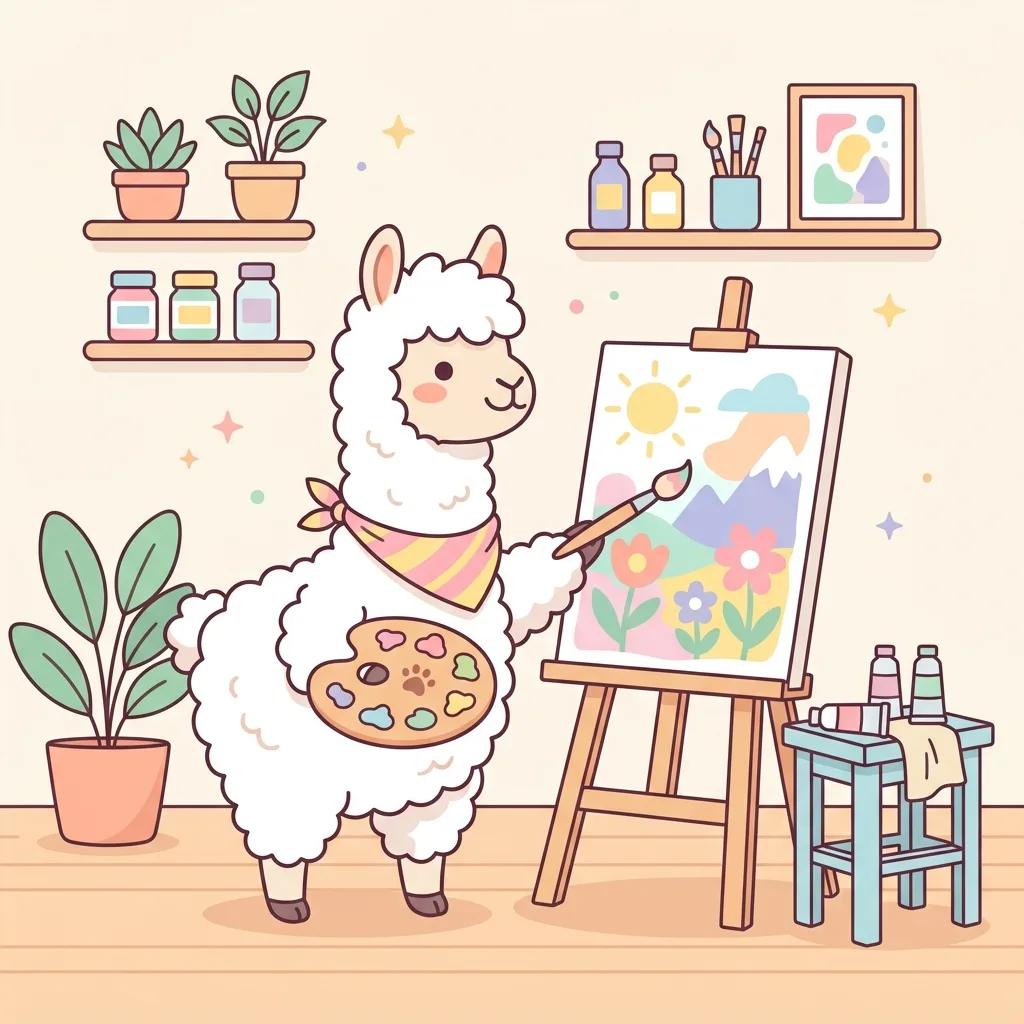
Llamas in Art and Design: From Andean Textiles to Modern Graphics
How llamas have influenced art and design: from pre-Columbian textiles to contemporary illustration, graphic design trends and the llama aesthetic in visual culture.
Llamas have been a recurring motif in Andean textile design for decades, but their presence in contemporary graphic design, digital illustration, and global fashion patterns exploded between 2015 and 2020. Analysing why this animal connects so well with today's aesthetic — spanning geometric, naïf, and multicultural styles — reveals deeper trends in how we consume images.
Revolution in Contemporary Illustration and Graphic Design
From Scandinavian Minimalism to Kawaii Maximalism
The llama has found its place across virtually every contemporary aesthetic movement, adapting with surprising versatility to different visual languages:
| Artistic style | Visual characteristics | Typical applications | Notable artists |
|---|---|---|---|
| Scandinavian minimalism | Simple lines, neutral palettes, basic geometry | Posters, children's books, apps | Lisa Congdon, Blanca Gómez |
| Japanese kawaii | Large eyes, pastel colours, rounded shapes | Merchandising, stickers, emojis | Tokidoki, Sanrio collaborations |
| Modern art deco | Angularity, gold tones, geometric patterns | Luxury branding, boutique hotels | Jessica Hische, Aaron Draplin |
| Urban street art | Vibrant colours, rough textures, social message | Murals, T-shirts, activism | Banksy-inspired, Os Gemeos |
| Botanical vintage | Watercolours, natural elements, script typography | Weddings, artisan stationery | Rifle Paper Co., Anna Bond |
Digital Iconography and Meme Culture
In the digital age, llamas have achieved viral phenomenon status, generating their own visual ecosystem:
- Emoji evolution: From simple representations to characters with defined personalities
- GIF culture: Dancing and expressive llamas that communicate universal emotions
- Meme templates: Recognisable formats that adapt to different humorous contexts
- Avatar systems: Llama customisations on social platforms and in gaming
- NFT art: Algorithmic llama collections with unique characteristics
Innovative Commercial Applications
Commercial graphic design has adopted llamas as a symbol of authenticity and human warmth:
- Sustainable branding: Eco-friendly companies using llamas to communicate natural values
- Food packaging: Organic products, tea, and cereals leveraging the association with health
- Tech startups: Apps and platforms using llamas to project accessibility and humour
- Hospitality design: Hotels and restaurants creating memorable, photogenic identities
- Educational content: Teaching materials using llamas to make learning more engaging
Textile Art: Andean Tradition Meets Global Design
Contemporary Reinterpretation of Ancestral Techniques
Contemporary textile artists have found in the llama a perfect bridge between millennia-old tradition and creative innovation:
| Traditional technique | Contemporary innovation | Pioneer artists | Target market |
|---|---|---|---|
| Backstrap loom weaving | Large-format installations, integrated fibre optics | Sheila Hicks, Annie Albers | Galleries, luxury hotels |
| Pictorial embroidery | Thread hyperrealism, llama portraits | Cayce Zavaglia, Michelle Kingdom | Collectors, museums |
| Narrative tapestry | Urban visual stories, llamas as protagonists | Grayson Perry, Kaws | Auction houses, foundations |
| Sculptural felt | Life-size llamas, mixed textures | Joseph Beuys-inspired | Art fairs, public spaces |
Interior Textile Design: The Domestic Llama
The world of interior design has embraced llama motifs as elements that bring warmth and personality:
- Statement wallpaper: Wallcoverings with stylised llamas creating dramatic focal points
- Cushion collections: Embroidered cushions blending Andean techniques with contemporary aesthetics
- Throw blankets: Blankets combining real alpaca fibre with graphic llama representations
- Curtain drama: Curtains with llama patterns that function as functional textile art
- Rug narratives: Rugs that tell stories in which llamas are the protagonists
Sustainable Fashion: Llamas as an Ethical Symbol
The fashion industry has adopted llamas both as a material (fibre) and as a symbol of responsible practices:
- Slow fashion brands: Labels using the llama as a mark of quality and durability
- Collaborative collections: International designers working with Andean artisans
- Seasonal capsules: Limited collections celebrating natural seasonality
- Gender-neutral design: Unisex garments with llama motifs that transcend categories
- Circular fashion: Pieces designed to last decades with proper care
Ceramics and Sculpture: Organic Contemporary Forms
From Pre-Columbian Tradition to the Contemporary Studio
Ceramics with llama motifs unite millennial techniques with modern aesthetic sensibilities, creating pieces that function as both utilitarian objects and original sculptures:
| Piece type | Predominant technique | Contemporary aesthetic | Average price |
|---|---|---|---|
| Artisan tableware | Wheel-thrown, natural glazes | Controlled imperfection, rough texture | 80-200€/set |
| Sculptural planters | Hand-built, slow firing | Biomorphic shapes, earthy colours | 45-150€/piece |
| Decorative figures | Moulded, polychrome | Stylised realism, matte finishes | 30-80€/piece |
| Large installations | Modular construction, raku | Monumentality, spatial intervention | 2000-15000€ |
| Ceramic jewellery | Miniaturisation, precious glazes | Wearable art, metallic finishes | 25-120€/piece |
Experimental Techniques and Innovative Materials
Contemporary ceramicists are exploring new technical frontiers that redefine what is possible with clay:
- Holographic glazes: Enamels that shift colour depending on the viewing angle
- LED ceramics: Integration of LED lighting into llama sculptures
- Translucent porcelain: Luminosity effects that recreate the softness of fleece
- Experimental raku: Firing techniques that create unique, unrepeatable textures
- Sound ceramics: Pieces incorporating elements that produce sound when interacted with
Functional Ceramics: Beauty in the Everyday
Utilitarian ceramics with llama motifs elevate everyday objects to the category of functional art:
- Coffee culture: Cups and teapots that turn the morning ritual into an aesthetic experience
- Table settings: Complete tableware that transforms meals into ceremonies
- Storage solutions: Vases and containers that organise with beauty
- Bathroom luxury: Bathroom accessories that bring a spa-like warmth
- Garden integration: Planters and sculptures that connect interior with nature
Interior Design: Integrating Llamas into Contemporary Spaces
Decorating Styles that Embrace the Llama Motif
Llamas adapt surprisingly well to diverse decorative styles, adding personality without overwhelming the space:
| Decorating style | How to integrate llamas | Key elements | Colour palette |
|---|---|---|---|
| Scandi-hygge | Linear illustrations, natural textiles | Light woods, wool, simplicity | Whites, greys, beiges |
| Bohemian maximalist | Colourful tapestries, embroidered cushions | Mixed textures, plants, patterns | Terracotta, mustard, green |
| Industrial chic | Urban art, metal sculptures | Iron, brick, contrast | Blacks, whites, accents |
| Japandi zen | Minimalist ceramics, negative space | Bamboo, stone, order | Naturals, monochromatic |
| Mediterranean coastal | Artisan tiles, natural fibres | Stone, linen, natural light | Blues, whites, sand |
Integration Strategies by Room
Each area of the home offers unique opportunities to incorporate the llama motif with sophistication:
- Living room focal points: One statement piece (large painting, sculpture) that defines the character of the space
- Bedroom softness: Textiles in neutral tones that bring warmth without overstimulating
- Kitchen personality: Utensils and tableware that make cooking a more pleasurable activity
- Bathroom spa-feel: Accessories that transform daily routines into moments of self-care
- Home office inspiration: Elements that bring calm and creativity to the workspace
- Kids' rooms adventure: Decor that stimulates imagination and creative play
Design Collaborations: When Brands Discover Llamas
The commercial design world has created memorable collaborations that elevate the llama motif:
- IKEA x Local artisans: Limited collections that democratise artisan design
- West Elm x Andean cooperatives: Textiles that connect global homes with local traditions
- Target x Independent artists: Accessibility meets creativity in affordable collections
- Anthropologie x Ceramic studios: Unique pieces that celebrate artisan imperfection
- CB2 x Contemporary illustrators: Graphic art redefining contemporary wall art
Professional Curation and Collecting Fundamentals
Curation Principles for Residential Spaces
Successful curation of llama-themed art requires balance, knowledge, and aesthetic sensitivity:
| Principle | Practical application | Specific example | Common mistake |
|---|---|---|---|
| Triangle rule | Three pieces forming a visual triangle | Tall artwork + mid-height cushion + low figure | Perfect alignment = static feel |
| Limited palette | Maximum 3-4 main colours | Beige + terracotta + white + green | Too many colours = chaos |
| Scale variation | Mix large, medium, and small sizes | Mural + A4 prints + small figurines | All same size = boring |
| Contrasting texture | Combine smooth, rough, glossy, matte | Ceramic + textile + metal + paper | Single texture = flat |
| Single focal point | One star piece per space | Large tapestry + subtle accessories | Multiple stars = competition |
Lighting for Llama Art
The right lighting can completely transform the perception of an artwork:
- Warm light (2700K): Enhances earthy tones and creates a welcoming atmosphere
- Track lighting: Allows you to direct light specifically at each piece
- Picture lights: Direct illumination that eliminates shadows and reflections
- Indirect uplighting: Creates ambient mood without competing with the pieces
- Dimmer controls: Adjust intensity according to time of day and activity
- Natural light management: UV-filter curtains and blinds to protect pigments
Investment and Art Valuation Guide
For serious collectors, understanding the llama-themed art market requires specialised knowledge:
- Limited editions: Numbered and signed prints retain their value better
- Provenance documentation: Certificates of authenticity and piece history
- Artist trajectory: Research the artist's career and future projection
- Medium durability: Archival materials that withstand the test of time
- Cultural relevance: Pieces that capture specific cultural moments
- Market timing: Buy during exhibitions or when the artist has high visibility
Frequently Asked Questions about Llama Art and Design
How do I prevent llama-themed decor from looking kitsch or childish?
The key lies in balance and sophistication in your selection. Choose pieces by recognised artists working with noble materials: hand-glazed ceramics, engravings on cotton paper, textiles in natural fibres. Limit the quantity: one high-quality statement piece is far better than multiple small decorative items. Consider context: in a minimalist space, a single llama sculpture can be elegant; the same five small figures would feel overwhelming. Colour palette matters too: neutral and earthy tones tend to read as more sophisticated than neon or bright pastel colours.
What formats and sizes work best in different spaces?
For spacious living rooms, consider prints of 50x70cm or larger, which have presence without dominating the wall. In bedrooms, medium formats (30x40cm) create intimacy without overstimulating. For workspaces, small pieces (20x25cm) add personality without distraction. Kitchens benefit from functional elements: tableware or utensils with subtle motifs. In hallways, series of 3-4 small pieces by the same artist create visual continuity. For bathrooms, choose humidity-resistant ceramics or prints framed with anti-reflective glass.
What is the price range for original art versus reproductions?
Original pieces by emerging artists range from 200 to 800€, while established artists may reach 2000-15000€ for major works. Limited editions (50-200 copies) offer a middle ground: 80-300€ for quality work. High-quality reproductions on museum paper cost 30-80€ when professionally framed. For ceramics, expect 45-200€ for unique handmade pieces versus 15-40€ for semi-industrial production. Textiles range from 60€ for hand-embroidered cushions to 800€ for traditional loom tapestries.
How do I determine if a piece is a good long-term investment?
Research the artist's trajectory: previous exhibitions, gallery representation, mentions in specialist publications. Verify documentation: certificate of authenticity, archival materials, conservation techniques used. Consider cultural relevance: pieces that capture current trends or connect with important artistic movements have stronger appreciation potential. Assess rarity: limited editions, unique pieces, or work from specific periods of the artist's career tend to hold their value better. Finally, buy what you genuinely love: personal enjoyment should be the primary motivation, with investment as a secondary benefit.
What special care do different artistic techniques require?
Watercolours and prints need UV protection and humidity control: framing with UV-filter glass and placement away from sunny windows. Ceramics tolerate gentle cleaning with a damp cloth, but avoid abrasive detergents that damage glazes. Textiles require regular gentle vacuuming and annual professional cleaning; avoid direct sunlight that can fade natural dyes. Metal sculptures need a dry environment to prevent oxidation; apply protective wax annually. For natural fibres such as llama wool, use natural moth deterrents and air regularly. All pieces benefit from seasonal rotation to distribute light exposure evenly.
Llamas in Contemporary Design
As you can see, llamas have earned their place in the design world thanks to their versatility and that spark of tenderness that resonates with people of all ages. We hope this artistic journey has filled you with creative ideas. Do you have any llama design objects at home? Tell us all about it!
TodoLlamas Team
Passionate about Andean culture and the world of camelids. Our mission is to research and share the most curious information about llamas.