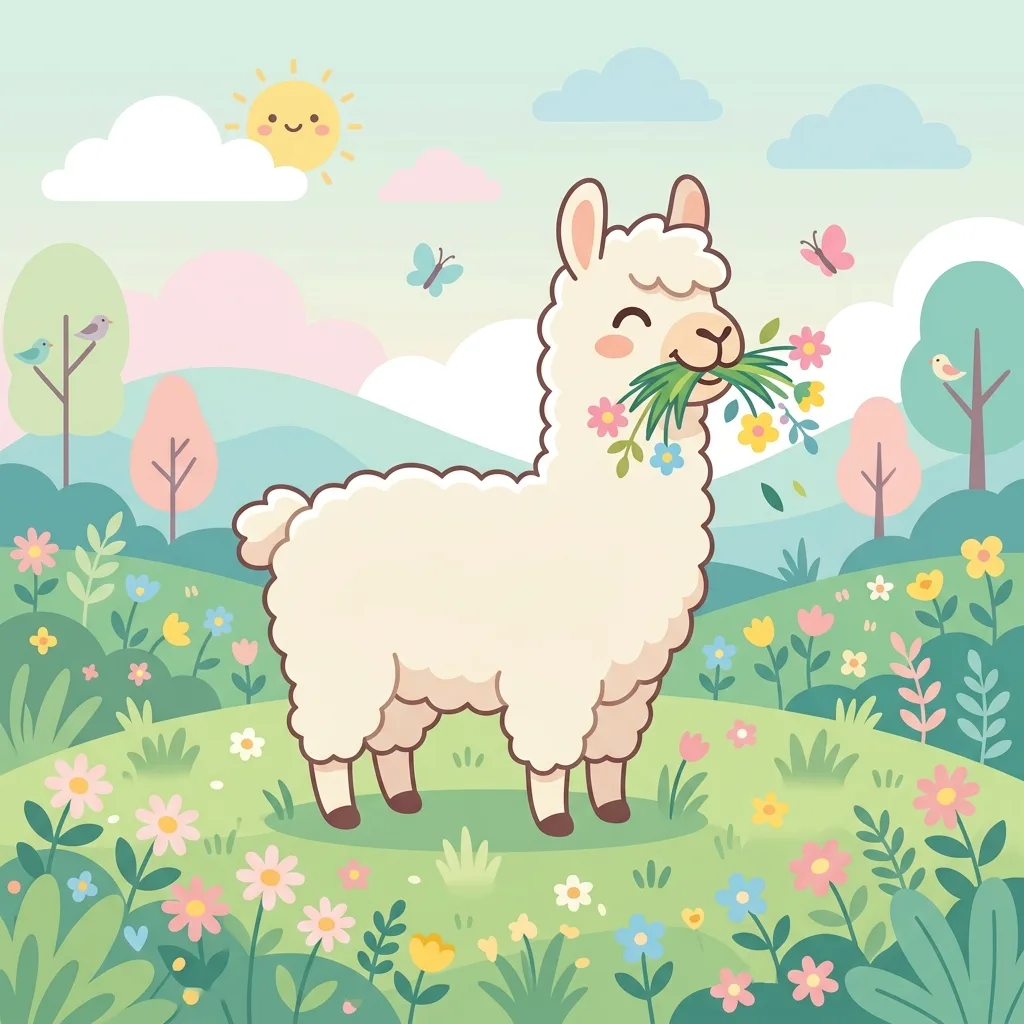
What Do Llamas Eat: Complete Feeding Guide
Discover everything about llama nutrition: what they eat in the wild and in captivity, daily portions, forbidden foods, and supplements. Complete 2024 guide.
Understanding what do llamas eat is the foundation of responsible llama ownership and husbandry. Llamas are herbivores with a digestive system finely tuned to low-quality forages. In their native Andean highlands they graze on tough highland grasses, but in captivity their diet needs careful management to keep them healthy. This guide covers exactly what they eat, how much they need, and which foods are dangerous for them.
The unique digestive system of llamas
Specialized digestive anatomy
Llamas have a three-compartment digestive system (they are not true ruminants like cattle):
- Compartment 1 (C1): 83% of total volume, functions similarly to a rumen
- Compartment 2 (C2): 6% of total volume, acts as a filtration chamber
- Compartment 3 (C3): 11% of total volume, equivalent to the abomasum
This structure allows them to:
- Ferment low-quality fiber with remarkable efficiency
- Recycle endogenous urea to conserve nitrogen
- Extract maximum nutritional value from poor forages
- Maintain a stable pH in the main fermentation chamber
The digestion process
Initial chewing: Llamas chew food only briefly before swallowing it.
Primary fermentation: The food enters C1, where bacteria and protozoa break down fiber over 20–40 hours.
Rumination: The partially fermented material is regurgitated for additional chewing, increasing the surface area available for digestion.
Final digestion: The processed material moves to C3, where nutrients are absorbed with the help of gastric juices.
Natural diet in the wild
Main native forages
| Plant | % of diet | Protein (%) | Fiber (%) | Seasonality |
|---|---|---|---|---|
| Ichu (Festuca dolichophylla) | 60–70 | 4–8 | 65–75 | Year-round |
| Tola (Baccharis spp.) | 10–15 | 8–12 | 45–55 | Dry season |
| Brome grass (Bromus catharticus) | 15–20 | 12–18 | 55–65 | Wet season |
| Totora (Scirpus rigidus) | 5–10 | 6–10 | 60–70 | Wetlands only |
| Other species | 5–15 | Variable | Variable | Opportunistic |
Seasonal foraging strategies
Wet season (December–March): Access to tender, nutritious pastures. Daily intake of 8–12 kg of green matter.
Dry season (May–October): Reliance on dried forages and shrubs. Intake drops to 4–6 kg of dry matter per day.
Transition periods: Opportunistic consumption of seeds, fruit, and new growth as available.
Specific nutritional requirements
Energy needs
Energy requirements vary with physiological status:
| Physiological status | Body weight (kg) | Mcal ME/day | Crude protein (%) |
|---|---|---|---|
| Adult maintenance | 130–180 | 11–15 | 8–10 |
| Late-stage gestation | 130–180 | 13–18 | 12–14 |
| Lactation | 130–180 | 16–22 | 14–16 |
| Growth (6–18 months) | 40–100 | 8–14 | 14–18 |
| Working / pack use | 130–180 | 15–20 | 10–12 |
Essential minerals
Llamas require a specific mineral balance:
- Calcium: 0.4–0.8% of dry matter (gestation/lactation)
- Phosphorus: 0.3–0.6% of dry matter
- Magnesium: Minimum 0.2% to prevent grass tetany
- Sodium: 0.1–0.2%, especially in warm climates
- Potassium: 0.8–1.2% in high-forage diets
- Sulfur: 0.15–0.25% for microbial protein synthesis
Feeding in captivity and on farms
Recommended forages
Top-quality hays:
- Alfalfa hay: 15–18% protein — ideal for gestation and lactation
- Timothy hay: 8–12% protein — excellent for maintenance
- Tall fescue hay: Similar to natural ichu — well accepted
- Oat hay: Palatable and digestible — good for convalescent animals
Hay quality criteria:
- Color ranging from green to greenish-yellow
- No dust, mold, or foreign matter
- Long fiber preserved (minimum 5 cm)
- Sweet, fresh aroma
- Moisture content below 15%
Grazing and pastures
Recommended pasture species:
| Species | Climate suitability | Productivity | Notes |
|---|---|---|---|
| Festuca arundinacea | Humid temperate | High | Tolerates heavy foot traffic |
| Dactylis glomerata | Temperate | High | Very palatable |
| Lolium perenne | Humid temperate | Very high | Requires irrigation |
| Bromus inermis | Continental dry | Moderate | Drought-tolerant |
Grazing management
Recommended stocking rate: 2–4 llamas per hectare, depending on pasture productivity.
Rotational system:
- Divide pastures into 4–6 paddocks
- Graze each paddock for 7–14 days
- Rest each paddock for 21–42 days depending on the season
- Entry height: 15–20 cm
- Exit height: 5–8 cm (no lower)
Strategic supplementation
Commercial concentrates
When to supplement:
- Late gestation (last 2 months)
- Lactation (first 3–4 months)
- Rapid growth phase in young animals
- Heavy work or stress
- Low-quality forage
- Poor body condition
Types of concentrates:
- Alfalfa pellets: 14–18% CP, high fiber
- Grain mix: Oats, barley, maize (limited)
- Commercial concentrates: Camelid-specific formulations
- By-products: Sugar beet pulp, soybean hulls
Mineral supplements
Camelid-specific mineral blocks:
- Calcium: 15–20%
- Phosphorus: 8–12%
- Salt: 25–35%
- Magnesium: 8–15%
- Zinc: 3,000–5,000 ppm
- Copper: 1,200–2,000 ppm
- Selenium: 20–30 ppm
- Vitamin E: 500–1,000 IU/kg
Water management
Water requirements
Daily water intake varies with several factors:
| Condition | Daily intake (liters) | Influencing factors |
|---|---|---|
| Temperate climate | 3–6 | Fresh forage available |
| Warm climate | 8–15 | Temperatures above 25°C |
| Lactation | 10–18 | Milk production demands |
| Dry diet | 6–12 | Hay/concentrate only |
Water quality
Acceptable quality parameters:
- Total salinity: <3,000 ppm (optimal <1,000 ppm)
- Nitrates: <100 ppm
- pH: 6.5–8.5
- Coliform bacteria: <1,000/100 ml
- Temperature: 4–25°C (avoid ice-cold water)
Toxic and forbidden foods
Common toxic plants
Highly toxic (potentially lethal):
- Castor bean (Ricinus communis): All parts, especially the seeds
- Oleander (Nerium oleander): Leaves and stems contain cardiotoxic glycosides
- Yew (Taxus baccata): All parts except the fruit pulp
- Ragwort (Senecio jacobaea): Contains hepatotoxic alkaloids
- Rhododendron (Rhododendron spp.): Contains neurotoxic grayanotoxins
Moderately toxic (cause illness):
- Rhubarb (Rheum rhabarbarum): Leaves contain oxalates
- Avocado (Persea americana): Persin is toxic to ruminants
- Green tomato and tomato leaves: Contain solanine and tomatine
- Onions and garlic: Contain harmful sulfur compounds
Forbidden processed foods
Never offer:
- Chocolate and caffeine-containing products
- Dairy products (lactose intolerance)
- Meat and animal-derived products
- Sugary foods or those containing artificial sweeteners
- Fermented or spoiled foods
- Foods with chemical preservatives
Feeding programs by life stage
Feeding crias (0–6 months)
0–3 months:
- Exclusive maternal nursing for the first 2–3 weeks
- High-quality alfalfa hay available ad libitum from week 2
- Fresh water always available
- Starter concentrate (18–20% CP) from week 4: 100–200 g/day
3–6 months:
- Gradual weaning between 4 and 6 months
- Progressive increase in concentrate: 300–500 g/day
- Introduction of other quality forages
- Growth-specific mineral supplementation
Feeding breeding adults
Breeding males:
- Maintenance: Quality forage + 200–400 g concentrate/day
- Breeding season: Increase energy by 25–50%
- Optimal body condition: 3.0–3.5 (scale 1–5)
Pregnant females:
- First 8 months: Maintenance diet
- Last 3 months: +25–40% energy and +50% protein
- Concentrate: 400–800 g/day depending on body condition
Nutritional monitoring and assessment
Indicators of nutritional status
Body condition score (scale 1–5):
- Score 1–2: Severe undernutrition — ribs visible
- Score 3: Ideal condition — ribs palpable
- Score 4–5: Overweight — obvious fat deposits
Normal clinical parameters:
- Dry matter intake: 1.8–2.5% of body weight
- Defecation frequency: 8–15 times/day
- Fecal consistency: Firm but not hard
- Mucous membrane color: Pale pink
- Capillary refill time: <2 seconds
Recommended laboratory tests
Forage analysis (annually):
- Dry matter and moisture content
- Crude protein and detergent fiber
- Metabolizable energy
- Major minerals (Ca, P, Mg, K)
- Presence of mycotoxins
Blood tests (as needed):
- Total protein and albumin
- Glucose and ketone bodies
- Serum minerals (Cu, Zn, Se)
- Fat-soluble vitamins
Managing common nutritional problems
Digestive disorders
Ruminal acidosis:
- Cause: Excess fermentable carbohydrates
- Symptoms: Diarrhea, depression, loss of appetite
- Prevention: Gradual feed transitions, effective fiber >18%
- Treatment: Withdraw concentrates, offer hay, administer bicarbonate
Impaction:
- Cause: Very dry forage, insufficient water, stress
- Symptoms: No defecation, abdominal distension
- Prevention: Constant water access, adequate fiber, exercise
- Treatment: Mild laxatives, rehydration, veterinary management
Nutritional deficiencies
Copper deficiency:
- Symptoms: Fleece discoloration, reproductive problems
- Treatment: Copper sulfate supplementation (100–200 mg/day)
Selenium deficiency:
- Symptoms: Nutritional myopathy, retained placenta
- Treatment: Selenium + vitamin E, monthly injections
Detailed frequently asked questions
How much should a llama eat per day?
An adult llama consumes 1.8–2.5% of its body weight in dry matter daily. For a 150 kg llama, that equals 2.7–3.8 kg of dry matter, or approximately 6–8 kg of hay at 12% moisture. During lactation, intake can increase to as much as 3.5% of body weight.
Can llamas eat fruits and vegetables?
Yes, but in moderation. Fruits such as apples (seed-free), pears, and carrots are safe in small amounts (maximum 500 g/day). Avoid citrus fruits, grapes, and stone fruits. Leafy greens like chard and spinach are fine occasionally.
Do llamas need grains in their diet?
Not necessarily. Llamas can be maintained on quality forages alone. Grains are used as an energy supplement during gestation, lactation, or heavy work. When used, oats and barley are preferable to maize, and the total should never exceed 1 kg/day to avoid acidosis.
What should I do if a llama refuses food?
Loss of appetite can signal illness, stress, or poor-quality feed. Check the freshness of the forage, water availability, signs of disease, and potential stressors. If the problem persists beyond 24 hours, consult a veterinarian who specializes in camelids.
Should feeding change with the seasons?
Yes, especially in grazing systems. In winter it may be necessary to supplement with higher-quality hay and boost energy for thermoregulation. In summer, ensure shade and plentiful water. The amount of concentrate also varies depending on the seasonal availability and quality of pasture.
Feeding your llama correctly: a practical summary
In short, a healthy diet is the secret to happy, strong llamas with that wonderfully fluffy coat we all love. Remember that the foundation of everything is fiber, clean water, and proper care. Do you have any questions about llama feeding or want to share your own experience? Leave a comment below — we would love to hear from you!
TodoLlamas Team
Passionate about Andean culture and the world of camelids. Our mission is to research and share the most curious information about llamas.